Thursday, March 29, 2012

We Haven't Had a Hurricane on Long Island, How Come my Insurance Still Went Up?

Welcome back to me, as I have not posted in a while now. The market for coastal and waterfront homeowners insurance on Long Island and in the New York - New Jersey - Connecticut area in general has, if anything, gotten a little better in the last year or so, with a few more carriers coming in to the market, and some companies at least NOT canceling as many people as they were 3 and 4 years ago. In addition, prices for insurance with the 'excess lines' markets such as Lloyds of London, Scottsdale, and many others, have been driven down by competition. This is/was especially true in the past several years where we have not had major storm activity.

But in the most recent six months, there has been a 'firming' of prices and some tightening of underwriting coming from these excess insurance carriers who are the ones taking the risk on houses closest to the shore. The question becomes, why? There are several reasons at play.

For one thing, it does not take a rocket scientist to figure out that in ANY type of insurance, but especially a line like home/fire insurance where there is a potential for catastrophic losses, rates can only go down so far before they 'bounce along the bottom'. That's the price at which companies start to notice that their profit margin is being squeezed. Insurance companies, if run properly, can make money, but it comes from relatively very small percentage profits on huge dollars. So when you are working on a 5% margin, or even less, it doesn't take much to turn your results from black ink to red.

The next thing that's having an effect on all insurance company profitability is the low interest rate environment. When the insurance company is able to get a decent income on their holdings, competition can force them to lower or hold the line on rates they charge to customers. But since most insurance companies invest mostly in interest bearing bonds, and we know what rates are available on those, their investment income has dropped substantially in the past few years.

Finally, the string of catastrophes in other parts of the world has an effect on the reinsurance market, which is where insurance companies buy insurance for themselves against the major catastrophes. That spreads the risk out all over the world, but unfortunately we have seen more and more events like tornadoes, tsunami's, massive flooding, and other things that, even though they might not happen here, still affect rates for property with a high catastrophe risk.

Monday, March 5, 2012

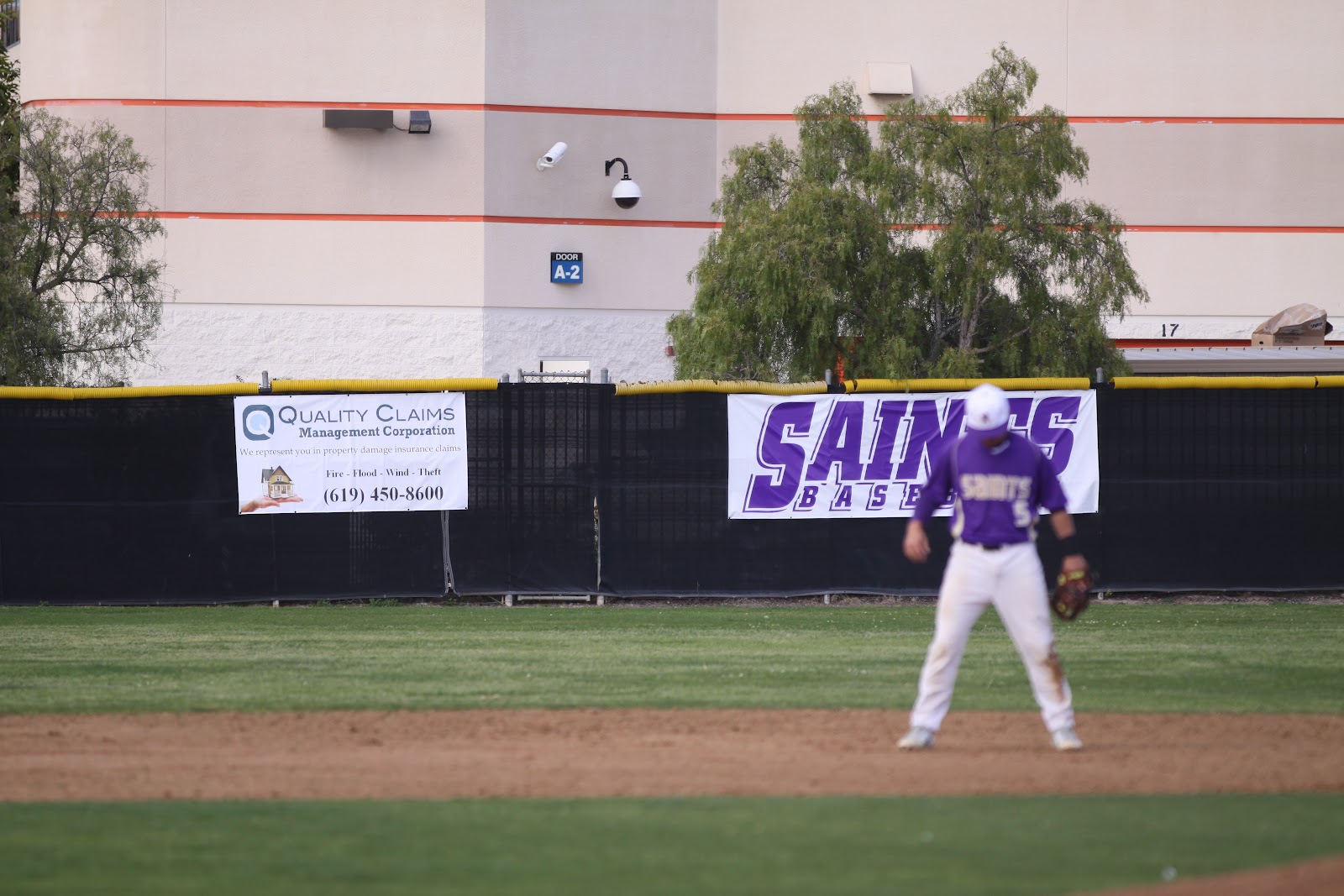
Quality Claims sponsors St. Augustine High School Baseball

Quality Claims recently committed to St. Augustine High School as one of the main sponsors for the Saints Baseball team.  St. Augustine High School, a Catholic school in San Diego, has had a very successful baseball program over the past 25 years as they have earned 15 league titles.  The Saints were also recently crowned Eastern League Champions in 2011.

Quality Claims is proud to sponsor Saints Baseball to help them continue their success and to support such a dedicated team.  Ron Reitz, President of Quality Claims, attended one of the Saints' games this past week and was able to show his support for the team.


Tuesday, January 10, 2012

Quality Claims Management Exhibits at the San Diego Spring Home Show

Quality Claims Management had the opportunity to participate in the San Diego Spring Home Show this past weekend.  The free event was open to the public and held in Downtown San Diego at the San Diego Convention Center.

Exhibitors from all avenues of home improvement were present to inform homeowners about their featured home products and services.  We were excited to share more about our company with the public and to offer advice to any attendees who may have experienced a disaster to their home or business.


Wednesday, January 4, 2012

Home insurance rates likely to go higher

By Adam Belz, USA TODAY
Homeowners insurance premiums are starting to rise after tornadoes, hail, winds and lightning slammed U.S. insurance companies' balance sheets throughout 2011.

Storms along the East Coast, tornadoes in the Southeast and in Joplin, Mo., and earthquakes in Japan and New Zealand wreaked havoc on insurance company finances, especially firms that might have too many policyholders in certain geographic areas, says Bob Skow, CEO of the Independent Insurance Agents of Iowa.

The numbers aren't in yet, since renewals don't all happen at one time, but Robert Hartwig, president of the Insurance Information Institute, says customers are starting to feel the cost of years of heavy losses, particularly in the Southeast and Midwest.

"We've had record losses for four straight years," he said. "My sense is that premiums will probably rise 4% to 5%."

In 2008, the average annual cost of homeowners insurance was $791, according to the Insurance Information Institute. Average premiums rose slightly to $799 in 2009 and $807 in 2010. Hartwig predicts that 2011's average premium will be about $840.

Insurers are charging more to cover higher loss projections and the rising cost of reinsurance — insurance on their insurance.

"Everybody got clobbered," Skow says.

Insured losses in the U.S. in the first half of 2011 were $17.8 billion, more than the $13.6 billion insurers paid in all of 2010, according to Munich Re, a giant European reinsurance company.

A few companies took enough losses they either had to scale back their exposure or became insolvent. Alfa Insurance, the second-largest home insurer in Alabama, announced in June that it would send non-renewal notices to 73,000 homeowners in the following 16 months. The late April outbreak of 300 tornadoes across the South — especially in Alabama — was the costliest storm in Alfa's history, the company reported

Three small insurance companies in Joplin became insolvent because of the May tornado that destroyed much of that town. The Missouri Farm Bureau is taking over policies for the companies, which had to pay out $48 million and didn't have adequate reinsurance to cover their losses, according to the Missouri Insurance Department.

ARTICLE SOURCE

Tuesday, January 3, 2012

Worst Natural Disasters of 2011 and Their Impact on the Insurance Industry

Posted on January 3, 2012 by Sergio Leal
It probably won’t surprise you to learn that 2011 was a record year for natural disasters in the U.S. According to the Insurance Information Institute (the “I.I.I.”), insurance companies will pay more than $32 billion in claims to help people rebuild homes and businesses damaged or destroyed by natural disasters in 2011, a record year for federal disaster declarations. Dr. Robert Hartwig, president of the I.I.I., said that “[t]he $32.6 billion figure doesn't even include the significant insured losses which arose after the pre-Halloween snowstorm, which caused enormous damage to multiple states along the Atlantic seaboard. Coupled with other events in 2011’s fourth quarter, direct insured losses could exceed $35 billion this year.”

Additionally, the I.I.I. reports that the federal government declared on 99 separate occasions this year that a major disaster existed after a natural disaster had occurred, easily breaking the previous record of 81, which was set in 2010. The 99 disaster declarations are nearly triple the average of 34 per year dating back to 1953, the I.I.I. added.

The federal National Oceanic and Atmospheric Administration (“NOAA”) announced that the U.S. was the site of 12 separate disasters, each of which caused at least $1 billion in aggregate damage in 2011. The previous record, set in 2008, was nine.

With all of these new records, you would think that the private insurance industry would be in a lot of trouble. Not so. According to the I.I.I., policyholders’ surplus –insurers’ net worth measured according to Statutory Accounting Principles – fell only four percent to $538.6 billion as of September 30, 2011, compared to $559.2 billion at year-end 2010. You read that right. Even though the insurance industry experienced one of its worst years ever, their net worth dropped by a mere 4%.

For more information, including a list of the 12 separate billion dollar disasters click here.

ARTICLE SOURCE